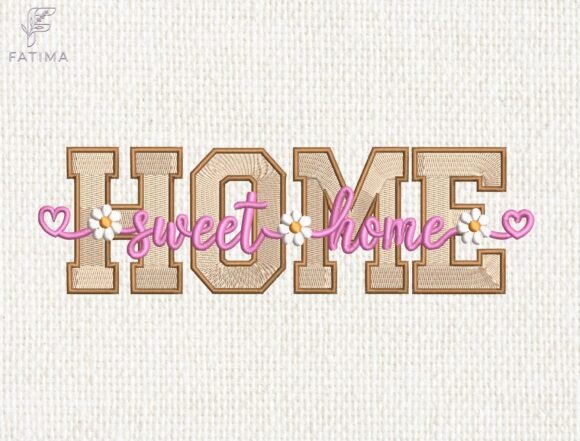
Home Sweet Home Embroidery Design Review
As a designer who has spent years curating machine embroidery design libraries for both personal projects and client work, I approach every new file with a critical eye. The market is flooded with generic patterns, so finding a piece that truly elevates a handmade product requires careful scrutiny. Today, I am evaluating the Home Sweet Home Embroidery Design, a file that promises to blend bold varsity aesthetics with homey charm. Before you download this embroidery file or commit it to a commercial run, let’s dig into how it actually performs in a real-world stitching scenario.
The First Impression: A Blend of Bold and Cozy
When I first opened the preview of the Home Sweet Home Embroidery Design, the visual impact was immediate. It does not shy away from making a statement. The description highlights a fusion of two distinct styles: the rugged, collegiate feel of varsity lettering paired with softer, welcoming motifs. This juxtaposition is what makes the design stand out in a sea of standard script fonts and floral wreaths. For an Etsy seller or a boutique owner looking to create a unique brand identity, this mix offers a fresh take on the classic "home" theme.
The layout feels balanced, avoiding the common pitfall of overcrowding the hoop. The bold typography anchors the piece, while the decorative elements add just enough whimsy without overwhelming the text. In terms of mood, it strikes a perfect chord between nostalgia and modern craft trends. It feels like a design meant for a well-loved kitchen towel or a personalized gift that says, "I care about your space," rather than a mass-produced item sitting on a big-box store shelf.
Testing the Waters: A Real-World Tote Bag Scenario
To truly understand the utility of this digital embroidery file, I imagined a specific project: creating a line of custom canvas tote bags for a local craft fair. Tote bags are a staple for small businesses, but they also present challenges due to the texture of the fabric and the need for durability. When I mentally mapped the Home Sweet Home Embroidery Design onto a 5x7 inch hoop, the scale felt appropriate for a large tote.
In this scenario, the bold varsity-style letters would likely utilize a heavy fill stitch to ensure legibility from a distance. The contrast against a natural beige canvas would be striking, especially if using deep navy or forest green thread colors. However, the smaller decorative details—the little flowers or house icons mentioned in the concept—would require precise execution. If the stitch density is too high in these tiny areas, the fabric might pucker, ruining the professional look of the finished product. This is a crucial consideration for any apparel decorator planning to use this design on textured fabrics.
Navigating Fabric Challenges and Hoop Limitations
While the design looks stunning in a digital mockup, practical application demands caution. Not every fabric plays nice with dense embroidery. If you plan to use the Home Sweet Home Embroidery Design on thin materials like silk or highly stretchy knits, you will need a robust stabilizer strategy. Without proper backing, the tension from the satin stitches could distort the garment, leading to a wavy, unprofessional appearance.
Furthermore, consider the hoop size. While the design seems versatile, shrinking it down for a small cap or a baby onesie could compromise the integrity of the lettering. Tiny lettering often loses definition when stitched at low resolutions or on curved surfaces. The intricate corners of the house motif might get lost if the machine struggles to navigate tight turns on a rounded surface like a baseball cap. For baby embroidery projects, where softness is paramount, ensure the back of the stitching is clean and free of loose threads that could irritate sensitive skin.
Strategic Placement for Maximum Impact
- Sweatshirt Embroidery: Place the design centered on the chest or across the back for a bold, varsity-inspired look.
- Kitchen Textiles: Use it on tea towels or aprons, positioning it near the hem for a subtle yet charming accent.
- Pillow Covers: Center the design on linen or cotton blends for a statement piece in living room decor.
- Embroidered Patches: Create standalone patches to sew onto denim jackets or backpacks for a DIY aesthetic.
Enhancing Product Value and Customer Trust
For a craft business, the quality of your design assets directly influences customer perception. A well-executed Home Sweet Home Embroidery Design can significantly boost the perceived value of a small shop product. Customers buying handmade items are paying for the detail and the thoughtfulness behind the creation. When the stitching is crisp, the thread colors pop, and the design sits flat on the fabric, it builds trust. Conversely, a poorly stitched version with visible gaps or puckering can damage your reputation as a professional maker.
This design works exceptionally well for holiday embroidery gifts or housewarming presents. The theme is universally appealing, making it a safe bet for personalized gifts that still feel special. By offering this design on various products—from custom apparel to nursery decor—you expand your inventory without needing entirely new creative concepts. However, remember that consistency is key. If you sell this design on a sweatshirt today, ensure the quality matches the one sold next week.
Practical Designer Notes for Success
Before you rush to stitch your first batch, follow these essential steps to ensure the Home Sweet Home Embroidery Design delivers its full potential:
- Test on Scrap Fabric: Always run a test stitch on the exact fabric you plan to use. Check for puckering, especially in the dense fill areas of the letters.
- Check Thread Contrast: Verify that your chosen thread colors stand out against the background. A dark design on a dark shirt may lack the visual punch needed for a standout product.
- Review Stitch Density: Inspect the file settings. If the density is too high, reduce it slightly to prevent fabric distortion, particularly on lightweight materials.
- Confirm Licensing: As a responsible creator, always confirm the licensing terms before selling finished items or digital files. Ensure you have the right to use this commercial embroidery asset for your business needs.
- Use Proper Stabilizer: Do not skip this step. Whether it is tear-away, cut-away, or water-soluble, the right stabilizer is the foundation of a clean embroidery project.
- Mockup Testing: Create printable mockups in black and white to see how the design translates without color distraction. This helps identify any balance issues before you cut a single thread.
Final Thoughts on Commercial Viability
The Home Sweet Home Embroidery Design is more than just a cute pattern; it is a versatile tool for creative entrepreneurs. Its ability to bridge the gap between bold typography and delicate home decor makes it a strong contender for any digital product seller or small business owner. However, its success lies in your execution. By respecting the limitations of your equipment, choosing the right fabrics, and adhering to best practices in stabilization and testing, you can turn this design into a bestseller.
Whether you are decorating a cozy blanket, creating a unique tote bag design, or preparing a limited-edition holiday collection, this file offers the visual appeal and thematic depth needed to engage buyers. Just remember to check the specific file details regarding formats and compatibility before purchasing, as these technicalities can make or break your workflow. With the right approach, this design will bring warmth and charm to your portfolio and your customers' homes alike.